- Employment Law Updates
UK Employment Law Updates in 2026
Stay ahead with the latest employment law updates. From HR policies to workplace rights and employee protections, laws are continuously being updated and changed to suit the evolving landscape of the modern workplace.
With the support of our employment law experts, get to know the updates that will impact your business in 2026.

Join 120,000+ global businesses that trust BrightHR






Employment Rights Act 2025 is here!
Introduced in October 2024, the major shake-up to employment rights in the UK has now been passed through parliament. With key changes to be implemented over the next two years, including:
- Day one rights for employees such as SSP and family leave rights
- A new employment law enforcement agency
- Major changes to the rights of workers on zero-hours contracts
- Flexible working will become a "default" for workers

Statutory Payments and Compensation Limits for 2026
On 20th March the government confirmed the remaining statutory payments and tribnal compensation limits to be implemented from April 6th 2026. This includes:
- Maximum weeks' pay for redundancy pay purposes - £751 (from £719)
- Maximum unfair dismissal compensatory award - £123,543 (from £118,223)
- Statutory guarantee pay - £41 (from £39)

From 6 April annual leave records to be kept for six years
An unexpected update to the Employment Rights Act includes a new enforcement date.
It has been announced that from the 6th April 2026 businesses will need to begin storing annual leave records for six years. The focus of which will be on records created from this date onwards, with the Fair Work Agency responsible for overseeing that these changes are implemented.
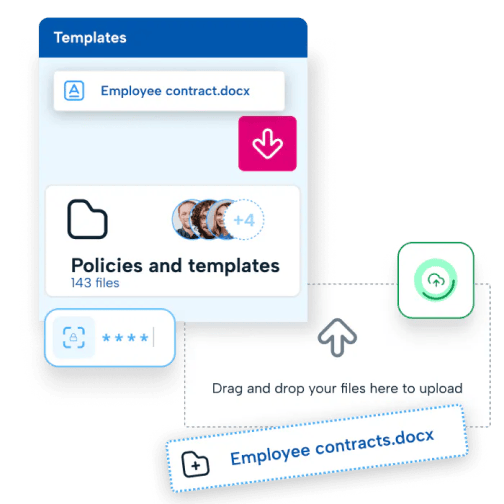
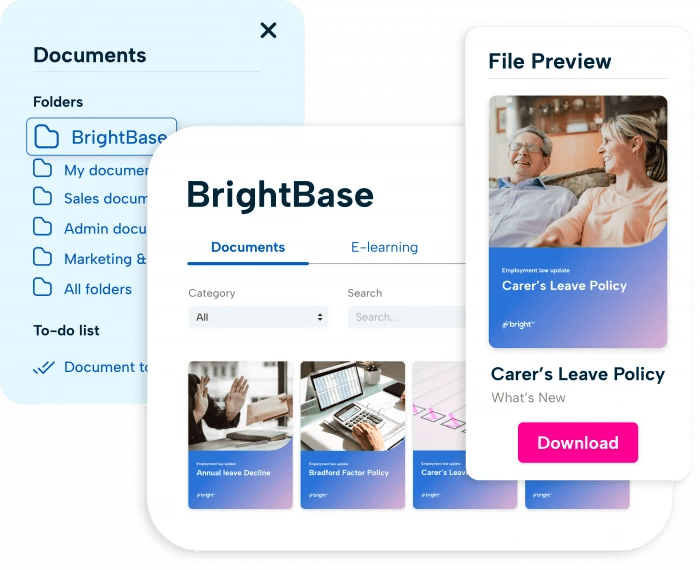
To comply it's important to ensure your business has the facilities to safely and securely store HR records.
Minimum wage rates from April 2026
From April 1st 2026, the following rates will apply:
- National Living Wage (aged 21+): £12.71 per hour (an increase of 4.1%)
- National Minimum Wage (aged 18-20): £10.85 per hour (an increase of 8.5%
- National Minimum Wage (aged 16-17): £8 per hour (an increase of 6%)
- Apprentice rate: £8 per hour (an increase of 6%)
With the support of a CIPP qualified payroll team, you don't have to worry about payroll headaches when new wage standards come into effect.

Cut through the red tape with BrightHR
Don't let important employment law updates pass you by, stay compliant with support from expert HR advisors.
Paternity and parental leave changes
From 6th April 2026, paternity and parental leave changes will come into effect. However, the UK government have announced that there will be a transitional period. This will reduce the notice period for paternity leave to 28 days to allow those who will become newly eligible to access the entitlement from the 6th April.
It's important to note that employees will be able to give notice from 18th February 2026 in anticipation of becoming newly eligible to take paternity/parental leave from 6th April 2026.
For those who are already eligible, this notice period will not change.
Changes to industrial action rules from 18 February 2026
From 18 February 2026, employers will see significant changes to the rules around industrial action and trade union activity.
Employees dismissed for taking part in industrial action will gain increased protection. Any dismissal linked to industrial action will be classed as automatically unfair, removing the current 12-week limit for bringing an unfair dismissal claim.
Trade union rules will also change on the same date, including removing picket supervisors, reducing the notice required given by unions of industrial action, and simplifying ballot notices.

Immigration updates for workers from overseas
Changes to immigration laws will affect employers who wish to hire employees from abroad.
From December 16th 2025 the ISC is increasing by 32%. This means higher costs for employers sponsoring workers under the Skilled Worker or the Senior or Specialist Worker route.
Starting January 2026, English language requirements will also change, increasing the requirement to a level B2, equivalent to A-Level.
It's important to stay aware of changes to employment law and immigration requirements in the UK. As an employer you have a responsibility to ensure any job applicants you hire have a right to work in the UK.
Get the advice you need
Stay compliant with employment laws in the UK with the support of HR experts.
How can you stay ahead?

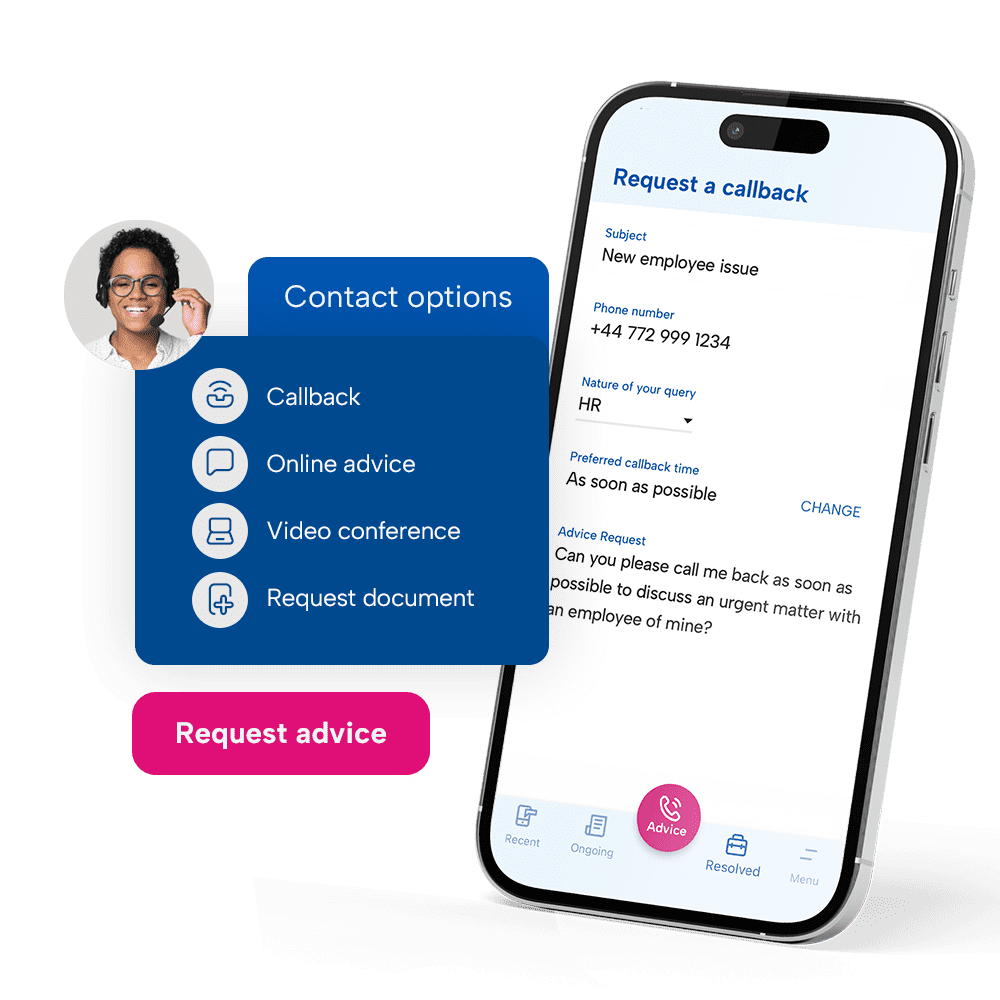
Get advice from HR experts
With the support of employment law experts on your side, you can get the latest and most accurate information you need to be HR compliant.

Align HR processes with employment laws
By leveraging technology, you can enhance and streamline your processes. Helping you to reduce the risks of compliance issues and out of date HR documentation.

Update policy documents and contracts
Your HR policies, documents and employment contracts are essential pieces of information helping you navigate and ensure compliance with employment laws.
HR never sleeps
Can't keep up with ever-evolving employment laws? Stay ahead of the curve with 24/7 expert support from our HR advice line.
Download our 2026 Survival Guide for Small Businesses
Wednesday, April 1, 2026
A Small Business Survival Guide 2026
The Employment Rights Act marks a turning point in employment legislation. Major changes include sick pay rules, and expanded parental leave and enforcement.
Now is the time for businesses to act in order to avoid disruption to HR operations and potential penalties from the new Fair Work Agency. Download our Small Business Survival Guide to prepare your business for the Employment Rights Act today.

Wednesday, February 12, 2025
Understanding employment law in the UK

Thursday, December 18, 2025
The Employment Rights Act 2025: Everything UK Employers Need to Know

Tuesday, January 13, 2026
Day one rights for your employees: Here’s everything you need to know

Wednesday, February 26, 2025
Right to work checks - everything you should know

Thursday, February 27, 2025
National Minimum Wage Act 1998

Friday, August 9, 2024
Managing UK wage standards with payroll software

Wednesday, April 9, 2025